← void horizon

Modular Composition Lab

A character is no longer one baked mesh — it's a recipe: a known-good base body + composable parts + a material preset + equip slots, assembled at load time. The same composition tech runs two ways: the mechanical lane mounts rigid plates one-bone-per-part, and the organic lane skins soft garments, hair and flesh to the shared skeleton (loose cloth gets its own sway chain). Everything rides the 19-joint runtime rig. Drag the live viewers to orbit; click any proof to zoom.

Tier 1 — Rigid mount

A hard part (armour plate, mech limb, eyewear, a gadget) is bone-mounted: bound rigidly to one joint so it rotates with the bone and never stretches. This is how mech plates and equip-slot accessories attach.

Tier 2 — Skinned

A soft part (fitted shirt, undersuit, long hair, a species tail) is skinned to the skeleton — weighted across joints so it deforms with the body. Fitted garments track the torso; hair follows the head.

Tier 3 — Loose cloth

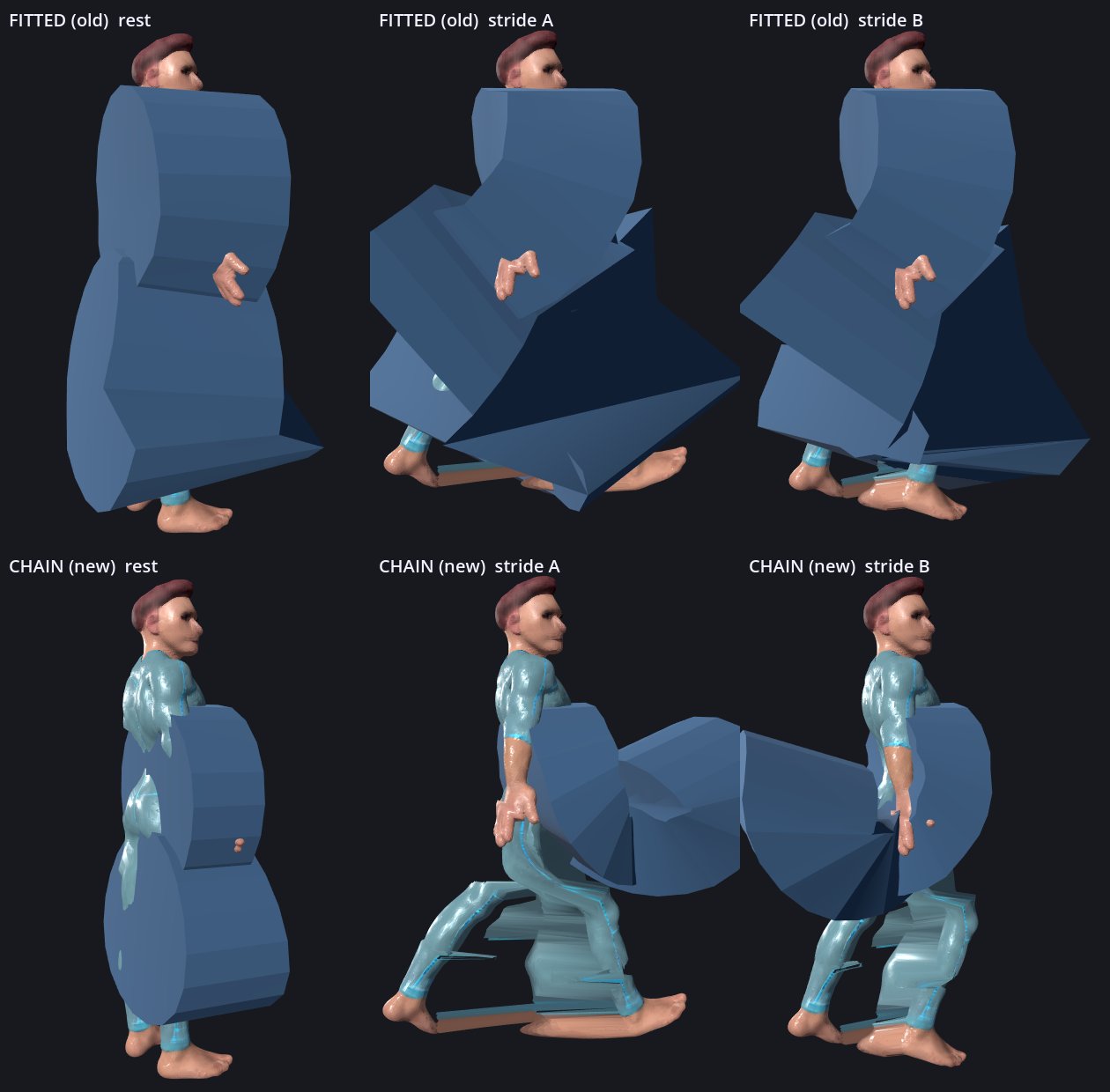
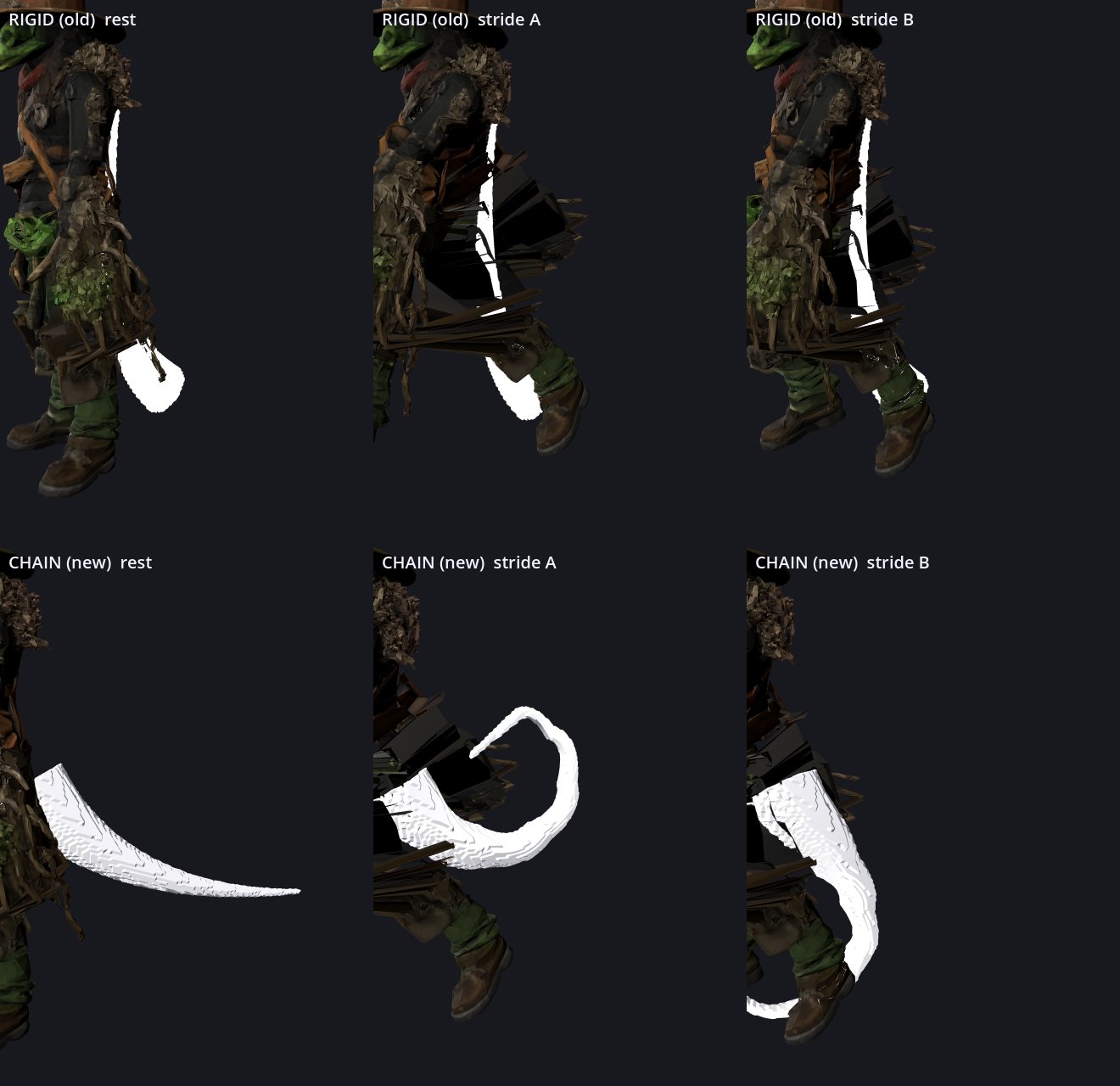
A flowing part (greatcoat, cape, reptilian tail) rides a sway chain: a spine of secondary bones that drape and lag behind motion, so cloth swings instead of shearing through the legs.

Mechanical — rigid plate mount

latest coherent a01

The live mechanical example is the latest coherent a01 forge: one authored hard-surface body with embedded motion. Superseded composite-part models and their proof sheets are no longer shown.
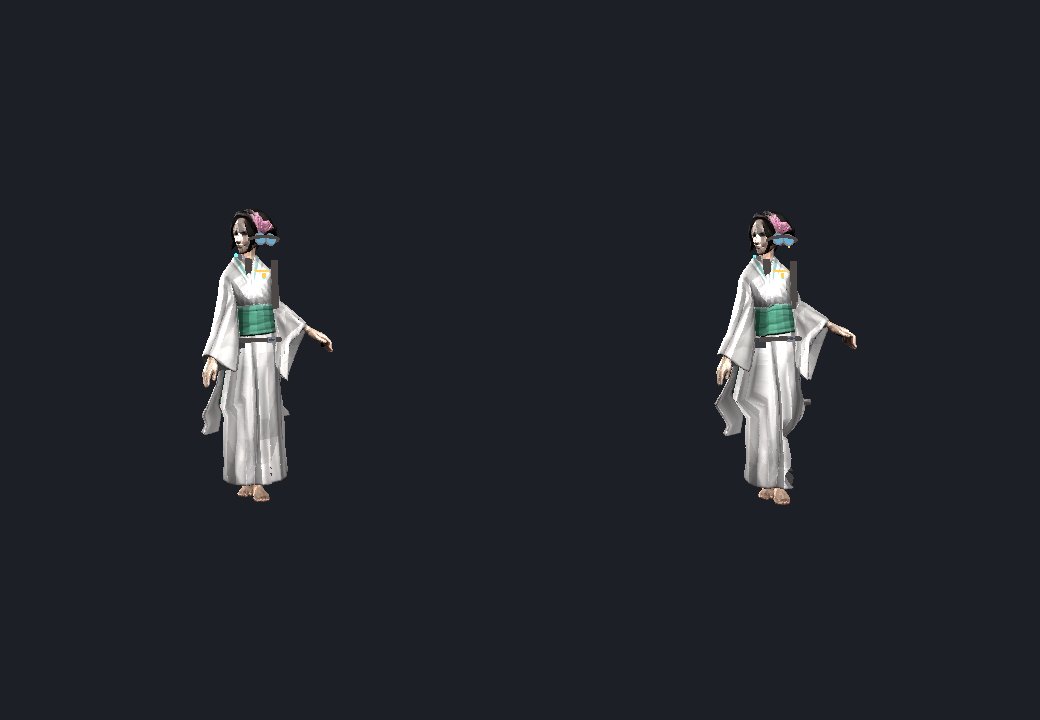
loading a01 mech…
a01 coherent mech · latest published model · live walk
▶ Open the current mech + golden-body switcher (Motion Lab) →
Character with bone-mounted eyewear and hair-ornament accessories, rest and posed
Bone-mounted accessoriesrigid Eyewear, jewelry, hair ornaments and gadgets fill equip slots as rigid parts mounted to head/hand bones — added to any base without touching the mesh.

Organic — skinned + cloth deform

SDXL → TRELLIS.2 1024³ → PBR+normal → decimate → skin(19-bone)

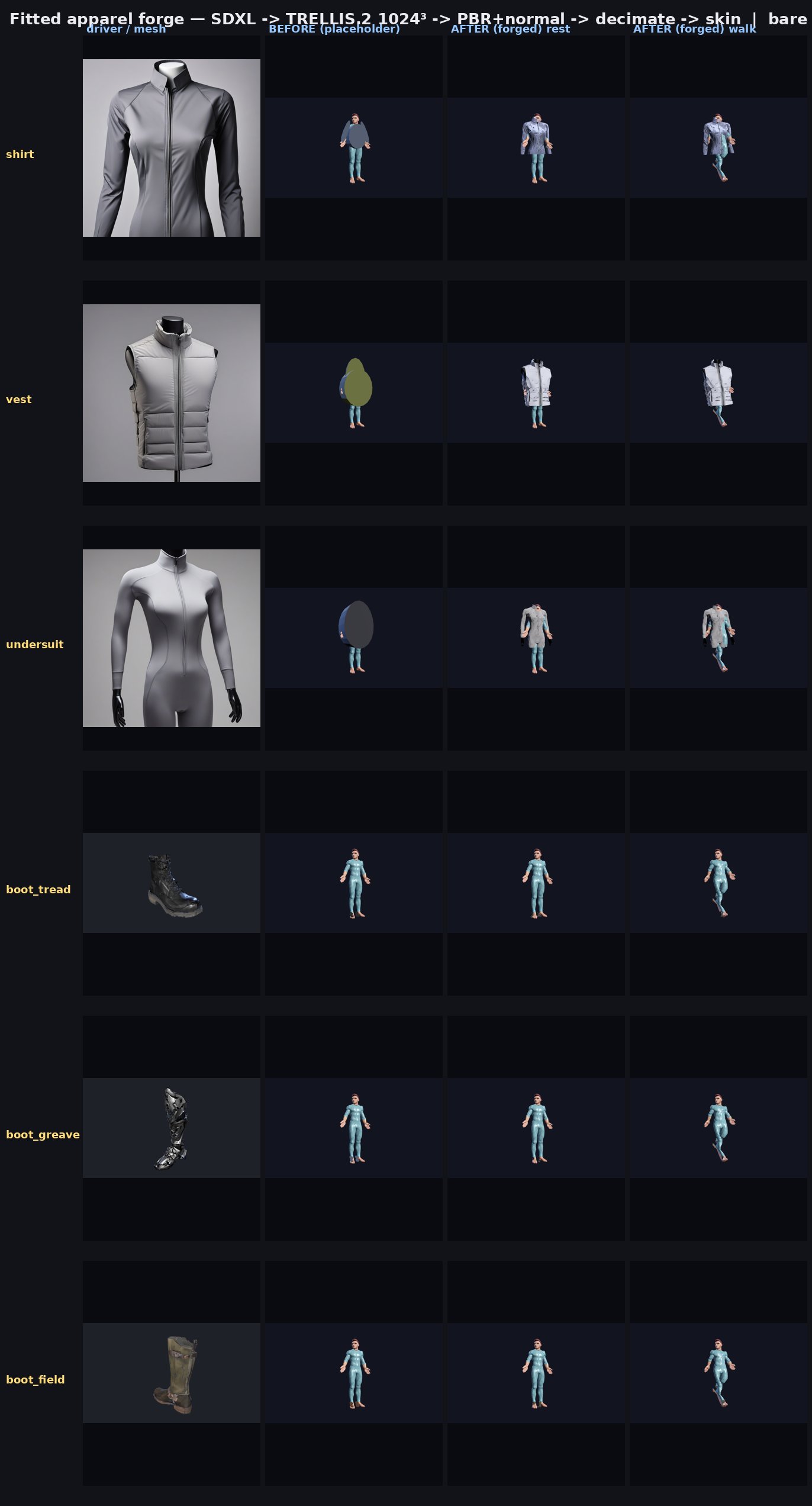
Flesh and fabric do bend, so organic parts are skinned to the 19-bone rig instead of mounted. Fitted apparel is forged from a base-body driver (no baked cloth), given real PBR + normal maps, decimated to a game budget, then weighted to the torso so it tracks the body. Loose garments and species appendages ride a sway chain so they drape and swing. The viewer below is a forged fitted undersuit — a real textured glb, staged as a Pages blob.
loading forged undersuit…
forged undersuit · TRELLIS.2 1024³ · PBR + normal
Fitted apparel forge grid — shirt, vest, undersuit, boots — driver mesh vs placeholder vs forged on body at rest and walk
Fitted apparel — forged game-readyskinned Shirt, vest, undersuit and boots: each forged from a clean base-body driver, PBR-textured, decimated, and skinned so it deforms with the wearer at rest and on the walk.
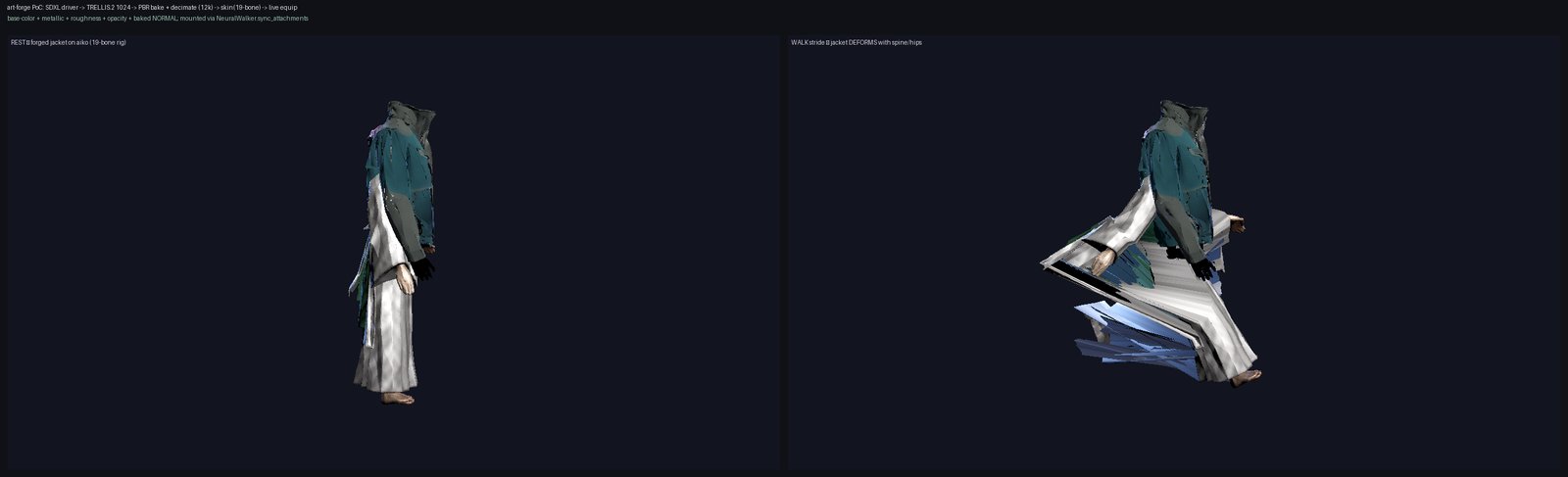
Forged jacket skinned to the 19-bone rig deforming with spine and hips on a walk stride
Skinned garment deforms with the bodyskinned A forged jacket mounted via the skeleton: at rest it fits, and on a walk stride it bends with the spine and hips — a true skinned piece, not a rigid shell.
Loose coat before/after — old rigid fit shears through legs, new sway chain drapes and swings
Loose coat — cloth drape + swayloose cloth The old fit (top) shears into blocky slabs through the legs on stride. The new sway chain (bottom) lets the coat drape at rest and swing behind the stride like cloth.
Reptilian tail before/after — old rigid tail snaps, new chain curls and flexes with motion
Species part — reptilian tailloose cloth A flexing appendage on the same sway-chain tech: the old rigid tail (top) snaps stiff; the new chain (bottom) curls and follows the stride so the tail reads as alive.
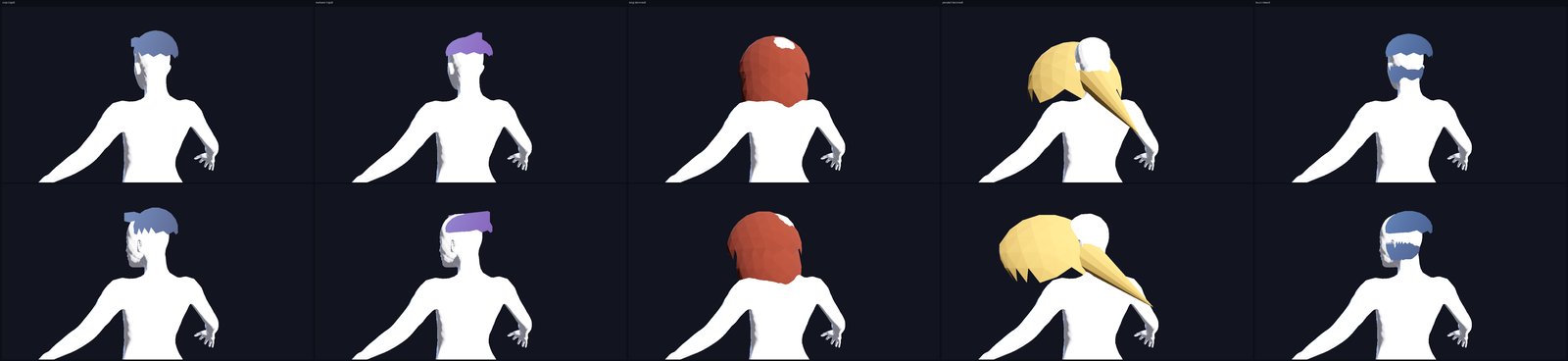
Hair set — crop, mohawk, long, ponytail, buzz+beard — rest top row, posed bottom row
Hair & facial hairskinned rigid Short caps and beards mount rigidly to the head; long hair and ponytails are skinned so they follow head motion. A hair library the base can equip like any other part.
Projected skin decal — a star marking on the garment/skin of a character
Skin decalsprojected Tattoos and faction markings are projected onto the surface as decals — identity added on top of the base body without editing its texture.